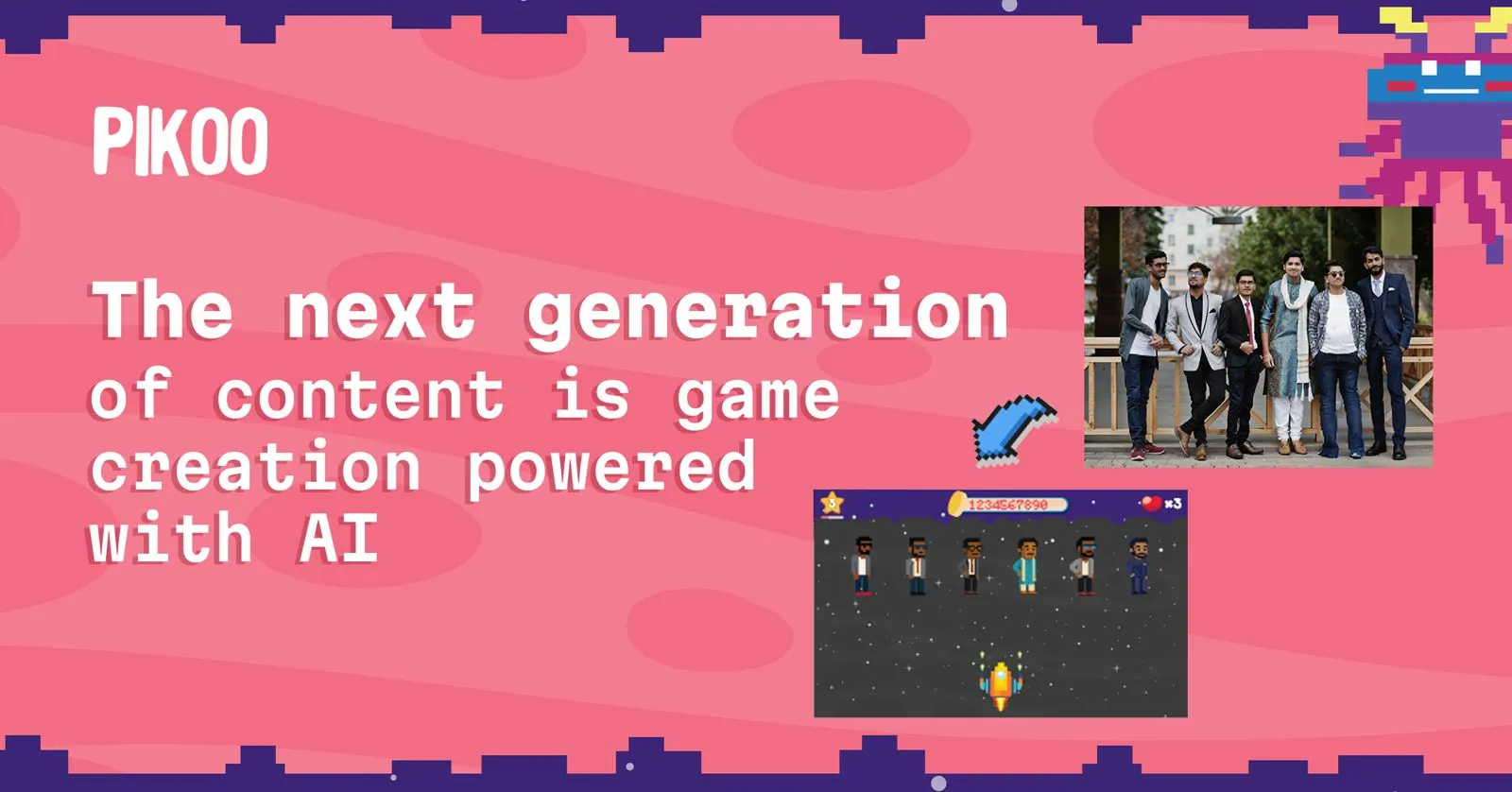
Game creation is one of the most intimidating creative endeavors we have today.
The Evolution
Part of this stems from the relatively recent emergence of video games as a medium. They’ve literally only existed for 40–50 years. That’s nothing compared to writing, music, or visual art. And yet, in that short span of time, games have evolved at an unusually rapid pace, coupled with technological advances across many fields.
To make even a reasonably good game today, you need to navigate multiple digital disciplines at once. Graphic design. UI. Animation. Sound design. Programming. Game mechanics. Player psychology. Level design. Distribution. Each of these fields evolves independently, and an innovation in any of them can suddenly shift what’s possible and who gets to make it happen. The frequency of these advances is every few weeks.
The result is predictable.
The Change
Almost no one has enough skills to make great games entirely on their own. Very few people have sufficient clarity, confidence, or access to resources to conceptualize a game and assemble the right team to bring it to life. Game creation can feel inaccessible, even to people who deeply love games.
In that sense, game creation today looks a lot like video creation did in the early 2000s.
In the past, making a video required expensive equipment, specialized software, and technical expertise. Most people were consumers, and a select few were creators. The desire to create existed, but the barriers were too high. Over time, that changed because technology advanced and reduced the cost of experimentation.
This is a pattern we’ve seen repeatedly.
When the internet became mainstream in the early 90s, it democratized text. Publishing shifted from institutions to individuals with access to a computer. Digital cameras and tools like Photoshop did the same for images. Smartphones with high-quality cameras and enough storage did it for video. Each time, a new content format emerged alongside existing ones, slightly reshaped behavior, and participation occurred at unprecedented scales.
Games are next.
The Future
Generative AI is the technological shift that enables this. While it entered the public imagination roughly four or five years ago, it’s only now reaching a point where real, practical use cases are coming together. The tools are becoming reliable enough, fast enough, and flexible enough to assist creation rather than just demonstrate novelty.
If history is any indication, the democratization of a content format is rarely about creation tools alone. It usually leads to the emergence of a new social platform built around that format. Facebook rode the wave of text and images. TikTok rode the wave of short-form video.
The stage is now set for the next shift centered around games.
Users from all walks of life create games with no constraints. Sharing them, remixing them, and treating games as everyday expressions of creativity.
That’s the direction this medium is heading. That’s what we’re building.
Leave a Reply